Suggested Excerpt
KONEX implemented a central kitchen MES for a 5,500 m² student meal facility in Shenzhen, connecting production planning, shop-floor execution, automated packaging counts, Andon alerts, and cloud reporting. The project improved real-time visibility and established a stronger foundation for food production traceability.
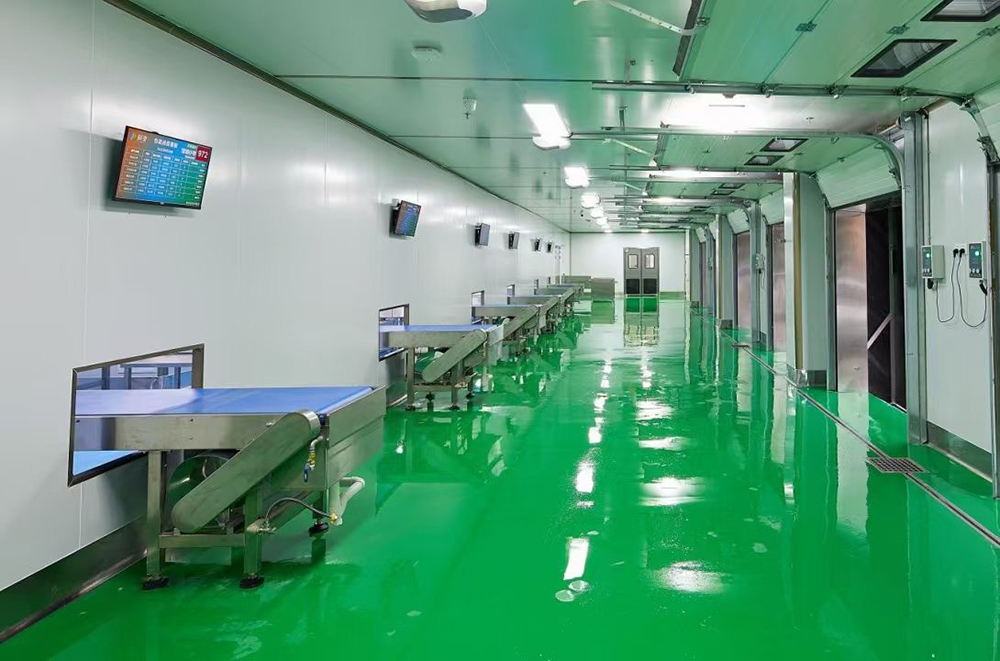
A digital production management project connecting planning, shop-floor execution, automated counting, exception response, and cloud reporting for large-scale student meal production.
| Customer | Shenzhen *** Catering Technology Co., Ltd. |
| Facility | Approximately 5,500 m² central kitchen |
| Application | Large-scale nutritious school meal production and distribution |
| Solution | Central kitchen MES and shop-floor data acquisition system |
Project Overview
Shenzhen *** Catering Technology Co., Ltd. operates one of the city’s large student meal production facilities. Its central kitchen prepares, packs, and temperature-controls meal deliveries for approximately 200 primary and secondary schools, with peak daily output reaching tens of thousands of meals.
As production volume increased, paper-based plans, manual counting, and on-site verbal communication made it harder to see progress across workshops, identify delays early, and consolidate reliable production records. KONEX therefore implemented a central kitchen Manufacturing Execution System (MES) that connected production planning with real-time shop-floor execution and data reporting.
The objective was practical: make central kitchen production more visible, measurable, responsive, and traceable without replacing the customer’s existing processing and packaging lines.
The Challenge: Managing High-Volume School Meal Production
A large central kitchen is not simply a place where food is cooked. Daily production must follow school orders, and hot-kitchen processing, inner packaging, outer packaging, and dispatch must remain synchronized to strict time windows. A delay in one critical step can affect downstream packaging and delivery.
Before the project, the management team faced several recurring challenges:
- Production plans and SOPs were printed and distributed manually.
- Managers had to walk between workshops to check production progress.
- Output data was recorded and summarized by hand.
- Manual package counting created a risk of missed or duplicated counts.
- Process overruns were difficult to detect early.
- Shortages, quality issues, and equipment abnormalities could be communicated too slowly.
- Different brands of legacy equipment lacked standardized data interfaces.
The KONEX Central Kitchen MES Solution
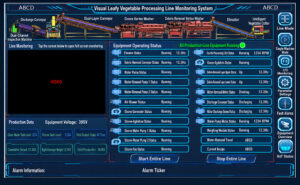
The nearly 5,500 m² facility includes hot-kitchen processing, inner and outer packaging lines, laboratory areas, storage, and other functional zones. The implemented MES covered the workflow from production plan release through processing, packaging, counting, exception management, and report generation.
1. Electronic Production Plans and Digital SOP Displays
Industrial display boards were installed in the hot-kitchen workshop to present the day’s production plan and SOP instructions directly at the point of work. Operators could see what needed to be produced and the current stage of execution without relying on repeated paper distribution.
Because central kitchens are exposed to heat, humidity, grease, and glare, ordinary office displays were not suitable. The project used high-brightness industrial displays with dust- and oil-resistant protection, additional enclosures, and site-specific heat-dissipation measures. Cleaning and maintenance procedures were also established to support stable long-term operation.
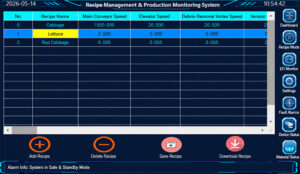
2. Retrofit Data Collection Without Replacing Existing Equipment
The customer’s packaging and production equipment came from different manufacturers, and many machines did not provide standard digital interfaces. Replacing complete lines solely for MES connectivity would have increased capital cost and disrupted production.
KONEX used non-intrusive, bypass data acquisition instead. Sensors, vision modules, and counting hardware captured the required production signals while preserving the core machinery and operating process. This retrofit approach made central kitchen digitalization more practical for an already-operational facility.
3. Automated Packaging Counts with Machine Vision
High-definition machine-vision counters were deployed on the inner packaging line to identify and count products automatically. After implementation and commissioning, the inner-packaging vision counting error rate was controlled at 0.1%. At outer packaging stations, travel switches converted equipment movements into production count data.
These automated counts entered the MES directly, reducing the workload and error risk of manual counting while creating a more dependable data foundation for output analysis and production reports.
4. Process Timing and Overrun Alerts
Critical production processes, including cooking operations, were configured with target time limits. When the actual duration exceeded the preset threshold, the MES generated an alert so supervisors could investigate before the delay affected downstream production.
The system does not replace operators or automate cooking decisions. Its value is to help managers identify abnormal process timing earlier and respond with better information.
5. Andon Calls for Faster Exception Response
The hot kitchen, inner packaging area, and outer packaging area are physically separated. An Andon call system now gives employees a clear channel for reporting shortages, quality problems, equipment issues, and other production exceptions.
When a call is triggered, the information is synchronized to the management interface and can appear through screen pop-ups and audible or visual alerts. This creates a clearer path from shop-floor detection to management response.
6. Cloud Reporting and Remote Production Monitoring
Production output, process duration, and exception records are consolidated in a cloud-based management platform accessible from office computers and tablets. Managers can review workshop status without repeatedly moving between production areas, and the system automatically generates production reports for analysis and traceability.
Reliable Performance During Concentrated Production Peaks
Student meal production is highly time-concentrated: large volumes must be completed within relatively short periods rather than evenly across the day. During these peaks, many production signals can reach the system simultaneously.
To improve reliability, the site network bandwidth was expanded and the solution adopted local data caching with asynchronous upload. If the network fluctuates temporarily, data can be retained locally and uploaded later, reducing the risk of losing production records during busy periods.
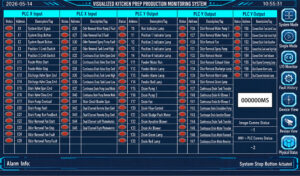
Implementation Results
- Paperless production communication: Daily plans and SOP instructions are displayed on industrial shop-floor screens, reducing printed paperwork and manual distribution.
- Earlier detection of process delays: Timed workflows and automatic overrun alerts help managers identify abnormal production conditions sooner.
- More accurate packaging counts: Machine vision is used for inner packaging and travel-switch counting for outer packaging, with the vision counting error rate controlled at 0.1%.
- Faster exception escalation: Andon calls give operators a direct way to report shortages, quality issues, and production abnormalities.
- Automatic production reporting: Output, process times, and exception records are consolidated into digital reports that support traceability.
- Remote visibility for management: Authorized managers can review workshop progress from computers and tablets instead of relying only on physical inspections.
User Adoption: Digital Tools Must Work for Shop-Floor Teams
The transition from paper SOPs and verbal communication to electronic displays and Andon terminals required an adaptation period for frontline employees. KONEX supported phased training, simplified the operating interface, and retained fast, easy-to-understand actions for essential functions.
After training and practical use, employees were able to operate the production displays and Andon devices confidently. This reinforced a central lesson from the project: a successful food production MES must fit the people, environment, and routines of the factory floor—not only the requirements of an office dashboard.
Next Step: Connecting Production with WMS and Distribution
The current system covers production planning, execution, process timing, automated counting, exception calls, and reporting. The customer has also identified opportunities to connect warehouse management (WMS) and logistics distribution modules in a future phase.
Extending the data chain from ingredient receiving and storage through production, finished-goods dispatch, and delivery would support broader supply-chain visibility and strengthen end-to-end food traceability.
Conclusion
This Shenzhen central kitchen MES project was more than a software installation. It required industrial hardware suited to hot, humid, and greasy kitchen conditions; retrofit data acquisition from mixed-brand legacy equipment; stable operation during concentrated production peaks; and practical change management for frontline teams.
By combining industrial displays, machine-vision counting, sensor-based data collection, Andon calls, process alerts, and cloud reporting, KONEX connected production planning, shop-floor execution, and production records. The result is a more transparent and traceable central kitchen operation with a stronger digital foundation for future warehouse and distribution integration.
Planning a new central kitchen or upgrading an existing food production facility? KONEX provides food-processing equipment, complete production-line solutions, factory layout support, and digital production management systems tailored to real operating conditions.